AfriPlumb
Plumbing & Heating
Dún Laoghaire, Dublin · serving all of Ireland
Websites that win work for Irish trades and service businesses.
Traffic without enquiries is a conversion problem, not always a traffic one. Here is how to tell the difference, the three things that quietly cost you the call, and what to fix first.
Get a free quote
Jemi ConstructionConstruction site built by Eflow Solutions
Your analytics show people arriving, but the phone stays quiet and the contact form sits empty. This is one of the most common frustrations we hear from Irish business owners, and the fix is almost never to chase more visitors. When traffic is up and enquiries are flat, the problem is usually not how many people find the site. It is what happens after they land.
There are two possible causes, and they need different fixes. Either you are drawing the wrong visitors, people whose search was never going to end in a call, or you are drawing the right visitors and the page is losing them before they act. Sorting out which one you have is the first job. Send more people to a page that already fails to convert and you just pay more for the same silence.
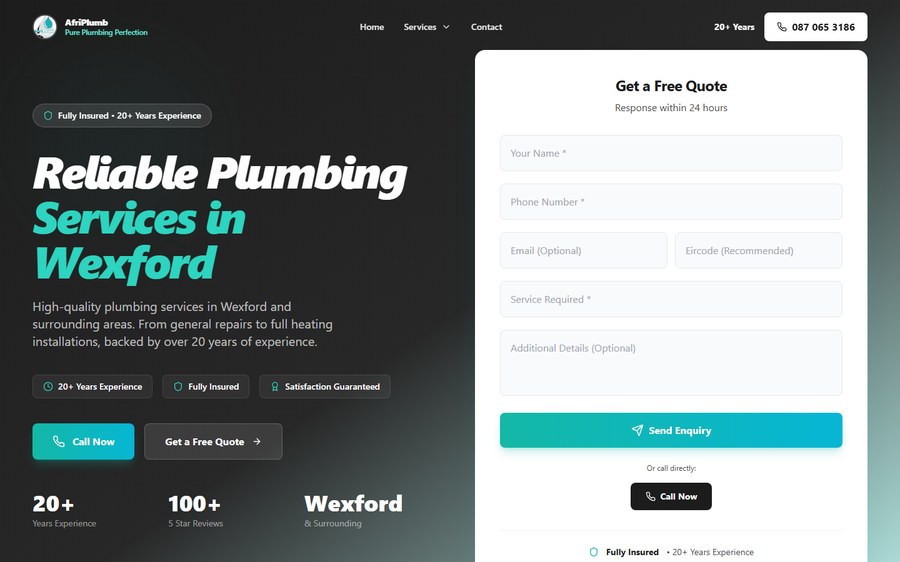
Plumbing & Heating
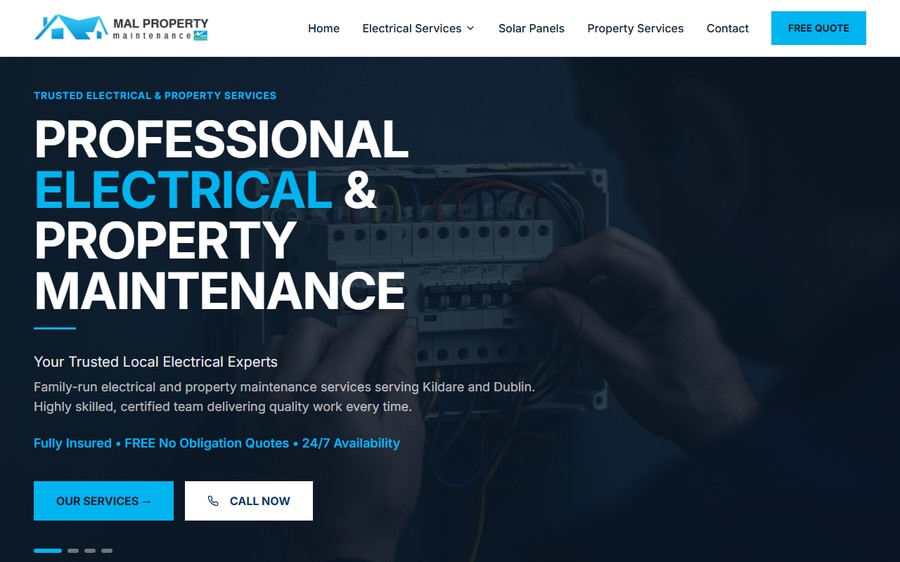
Electrical & Property
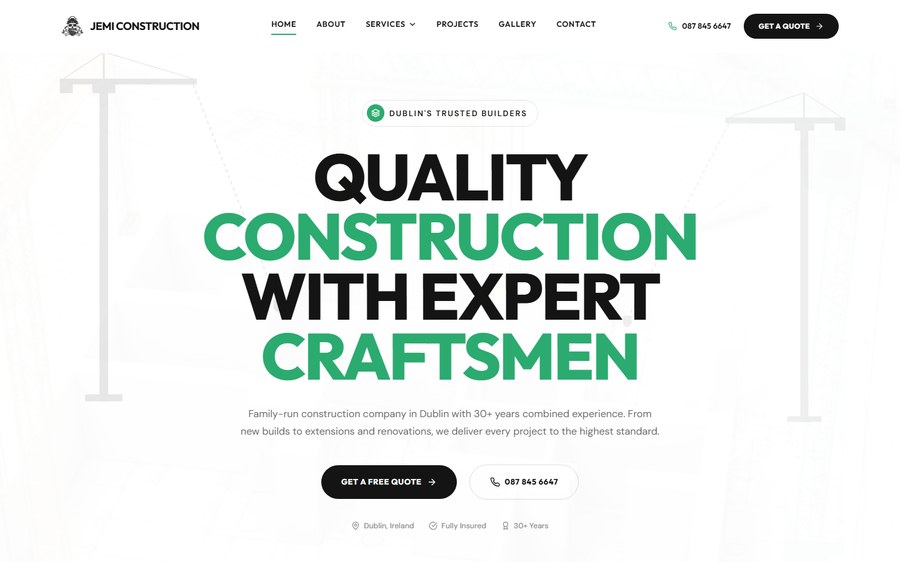
Construction
Carpentry & Building
Open your analytics and look at two things: where your visitors come from, and which pages they land on. If most of them arrive on a blog post or a general guide and leave again, you have a traffic problem. Those readers came to learn something, not to hire anyone that day, and no amount of page tweaking will turn them into enquiries. If most of them land on a service page or your pricing page and the enquiries are still flat, you have a conversion problem. The right people are reaching the right pages, and something on those pages is quietly turning them away. That second case is the one worth fixing first, because the audience is already there.
A visitor decides in seconds. If the page does not tell them plainly what to do next, call, message or request a quote, most will not hunt for it. One clear action, repeated where it is easy to see, beats a page full of options that all feel optional.
Most of your visitors are on a phone. If the site is slow to load, the number is not tappable, or the form is fiddly on a small screen, people leave and try the next result. A fast, thumb-friendly page keeps them long enough to act.
A stranger will not enquire until they believe you can do the job. Real reviews, photos of your work and a clear sense of who you are do that work. Without them, even the right visitor hesitates, and a hesitating visitor closes the tab.
The businesses that get steady enquiries are rarely the ones with the most visitors. They are the ones whose pages are built to convert the visitors they have. When we built and run Delaney Tarmac's site, the pages were shaped around the exact searches their customers use and a single clear way to make contact, and it settled at roughly 25 to 30 enquiries a month from search. That came from matching the right pages to the right intent, not from chasing raw traffic. The same thinking sits behind our web design work: get the page converting first, then use local SEO to bring more of the right people to it.
Raw visits are a vanity number. Track the actions that pay you: calls, WhatsApp taps and form submissions. If visits climb while those hold flat, the site is leaking enquiries, and now you know where to look instead of guessing.
Open the site on your mobile as a customer would. Time how long it takes to load, try to call in one tap, fill in the form. The friction you feel in that minute is the same friction losing you enquiries every day, and most of it is fixable.
Send us your site. We come back with a plain-English review of what is losing you the call, and how to fix it.